
Rubber tubing with the metal wire inside
Rubber tubing is an item that has been modified to have various implementations. They can be found in our homes as hoses, in the vehicle industries as liquid or gas transportation tubing. In addition, they have been used for electrical sleeving in wire protection measures. The wires and cables go through the tubing and they are protected from abrasion and surrounding heat. Besides the regular rubber tubing, there are various modified tubes. For example, there are the NBR rubbers, silicones, and other chemical-resistant pieces. however, a special type of tube is the rubber tubing with metal wire inside.
There are many potential uses for the rubber tubing with the metal wire inside. For example, they are durable, and they can withstand pressure both from the inside and the outside of the tube. The wire that has been combined with the rubber offers great reinforcement and rigidity. However, because of the wire, the tubing is less elastic so the implementation has to be well thought of. In addition, the rubber can be further modified if you need any special characteristics. There can be a great heat-resistant rubber tubing that has a metal wire inside which is suitable for factories and various industries. In case you need tubing that is resistant to acids or other chemicals, we can also produce that reinforced with wires.
There are two important parameters for you to understand before you purchase. Firstly, you need to make sure that the lumen of the tube will be suitable for your project. In case you plan on routing cables, make sure you measure their diameter to make sure they fit. If the tubing is meant for liquid or gas transportation, the lumen has to be the right fit to the connectors, so measure precisely. In case you have trouble picking the right dimensions, or you need additional information about the rubber tubing with the metal wire inside, please contact our firm.
Rubber Hose Size Catalog
Compare tube bore, outside diameter and available wall thickness. Confirm material compatibility and operating requirements for the selected hose.
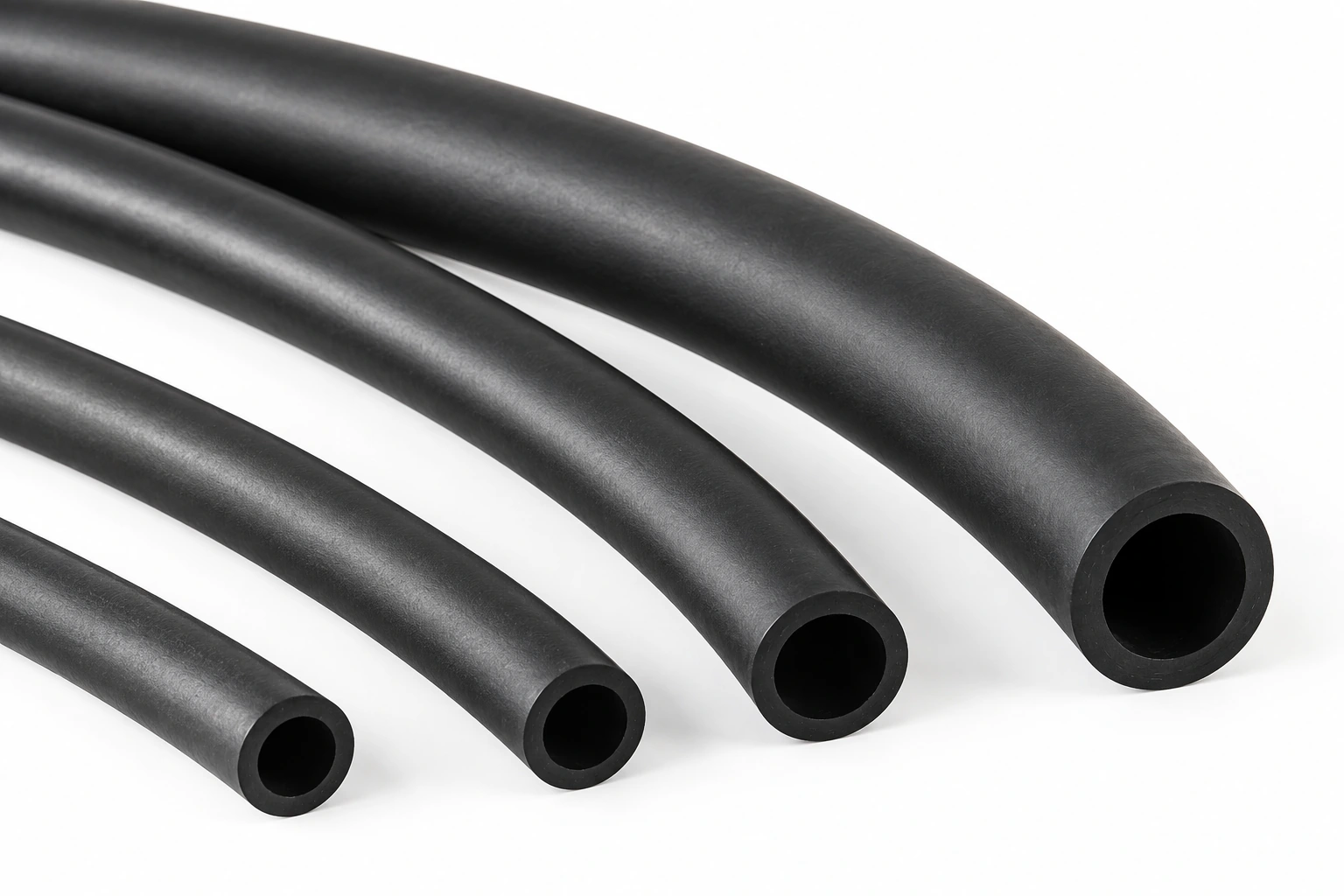
Rubber Hose
Compare Inside Diameter and Outside Diameter in mm. The cross-section drawing identifies the bore and outside diameter; confirm the selected tube material and service requirements.

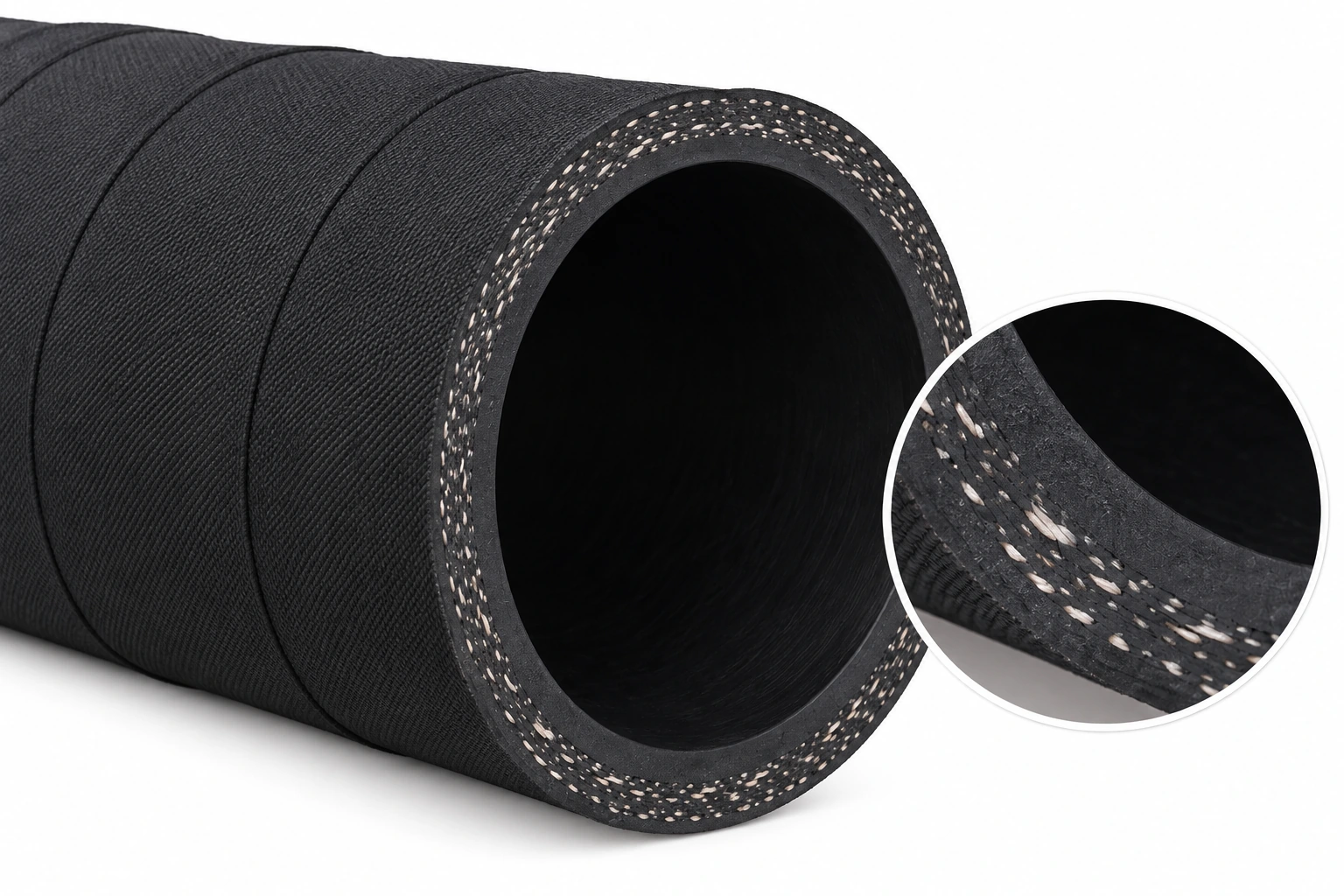
Fluororubber Hose
Compare Inside Diameter and Outside Diameter in mm. The cross-section drawing identifies the bore and outside diameter; confirm the selected tube material and service requirements.
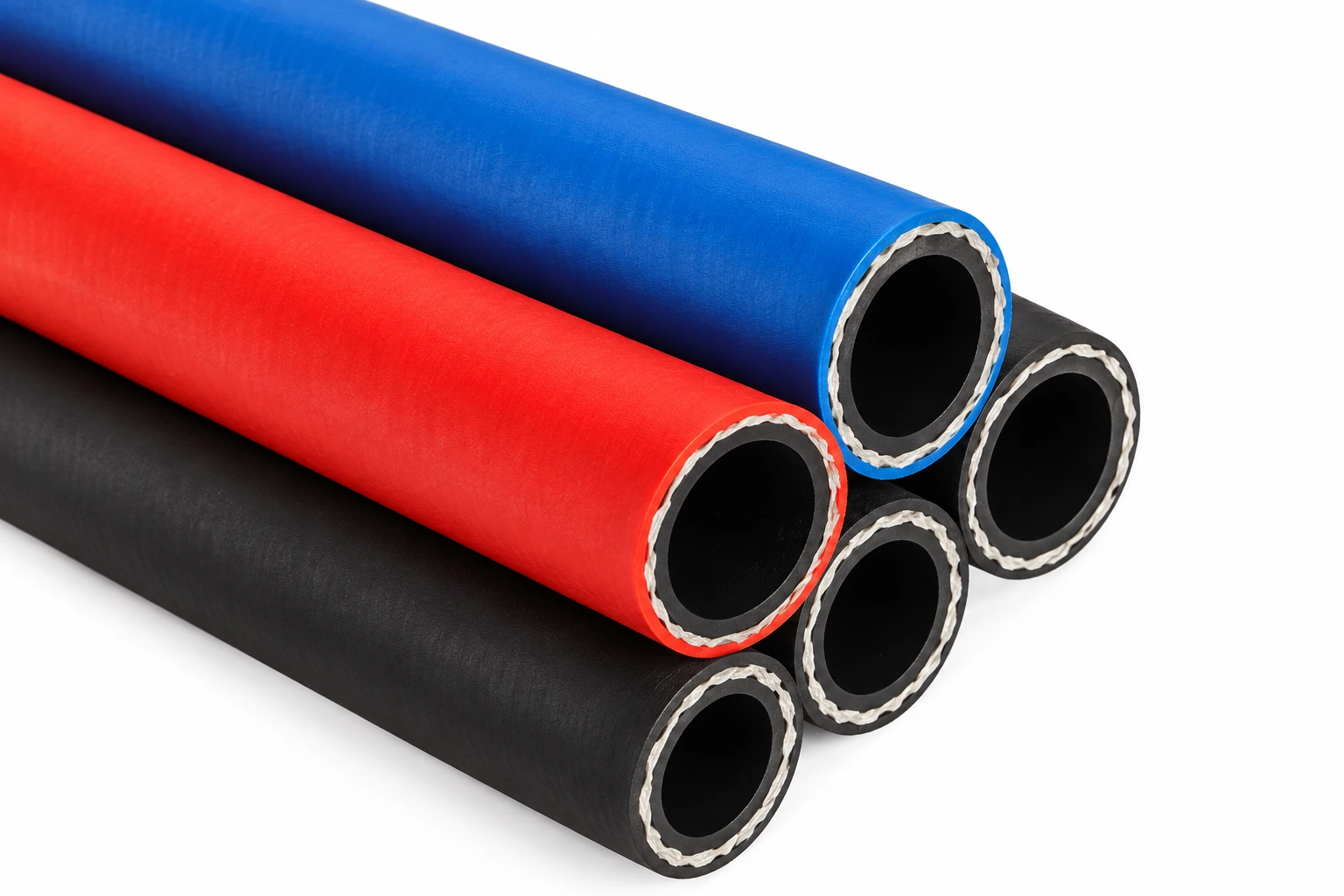
Colourful rubber high pressure hose
Compare Inside Diameter and Outside Diameter in mm, together with the listed Thickness and Colour. The cross-section drawing identifies the bore and outside diameter; confirm the selected tube material and service requirements.
Need a different size? Share your drawing, mating dimensions and intended use to discuss a suitable part.
Discuss Your RequirementsProduct specifications
- Product form
- Tubing with spiral or wire reinforcement
- Material options discussed
- NBR. Choose one formulation for the actual contact and loading conditions.
- Application focus
- Cable sleeving and vehicle hose runs. Size the part against the selected assembly.
- Dimensions to confirm
- Inside diameter, outside diameter, wall thickness and cut length. Match these to cable sleeving and vehicle hose runs.
- Reinforcement
- Define the spiral or wire reinforcement, pitch and termination at the hose ends.
- Contact conditions
- Other gases and acids: define concentration, temperature and contact time, then check compatibility with the chosen compound.
- Exposure to evaluate
- Rubbing or abrasion. Validate the selected material under the combined conditions.
- Line layout
- Check bend radius, unsupported spans and clearance at both connections.
Need a quote or a custom part?
Send your requirements, drawings or samples to discuss standard and custom silicone rubber parts.
Email us[email protected]