
Rubber stopper manufacturers
When it comes to rubber stoppers you are probably wondering what can be so complicated about producing such small things. Although rubber stoppers are not large, their function is sometimes crucial. That is why rubber stopper manufacturers plan every type of rubber stopper carefully before they are produced. Their construction is very complex. Rubber stopper manufacturers offer a wide array of products – we are talking about stoppers with or without threads, with or without flaps, certain production criteria must be met. Before starting mass production, rubber stopper manufacturers test verious things: from the quality of the closure, damage during falls, heat resistance and many others.
Although their size is small, don’t think they are easy to produce. Acccording to rubber stopper manufacturers, the production process of this type of plug requires great professionalism and attention, in order to reach all the criteria and meet the expectations and policies of the company as well as customers. When we talk about the specific production of the rubber stopper, there are two popular technologies. One relates to injection and the other to molding. When it comes to the first technique, rubber or plastic is used and the procedure is quite simple. The mass passes through the tank to the extruder where it is heated and melted. After that, under the pressure of the extruder and piston, rubber stopper manufacturers inject resin and fill the mold.
After cooling and shaping, the product is removed from the mold. This is the most common way to make corks for drinking bottles, sports bottles with flaps and the like. In addition to this method, as we have already said, there is also a production that involves compression molding. The principle is quite similar. Either way, you get a high-quality rubber product that you can reuse. Rubber stoppers are resistant to external and internal factors, resistant to UV radiation. These plugs can withstand temperatures from -40 degrees up to 120 degrees c.
Stopper & Plug Size Catalog
Compare four stopper profiles and check the selected part dimensions against your opening and available depth. Each profile has its own drawing and dimension meanings.
Custom colors are available to your Pantone color code. Include the code in your inquiry.
RST T-Shaped Plugs
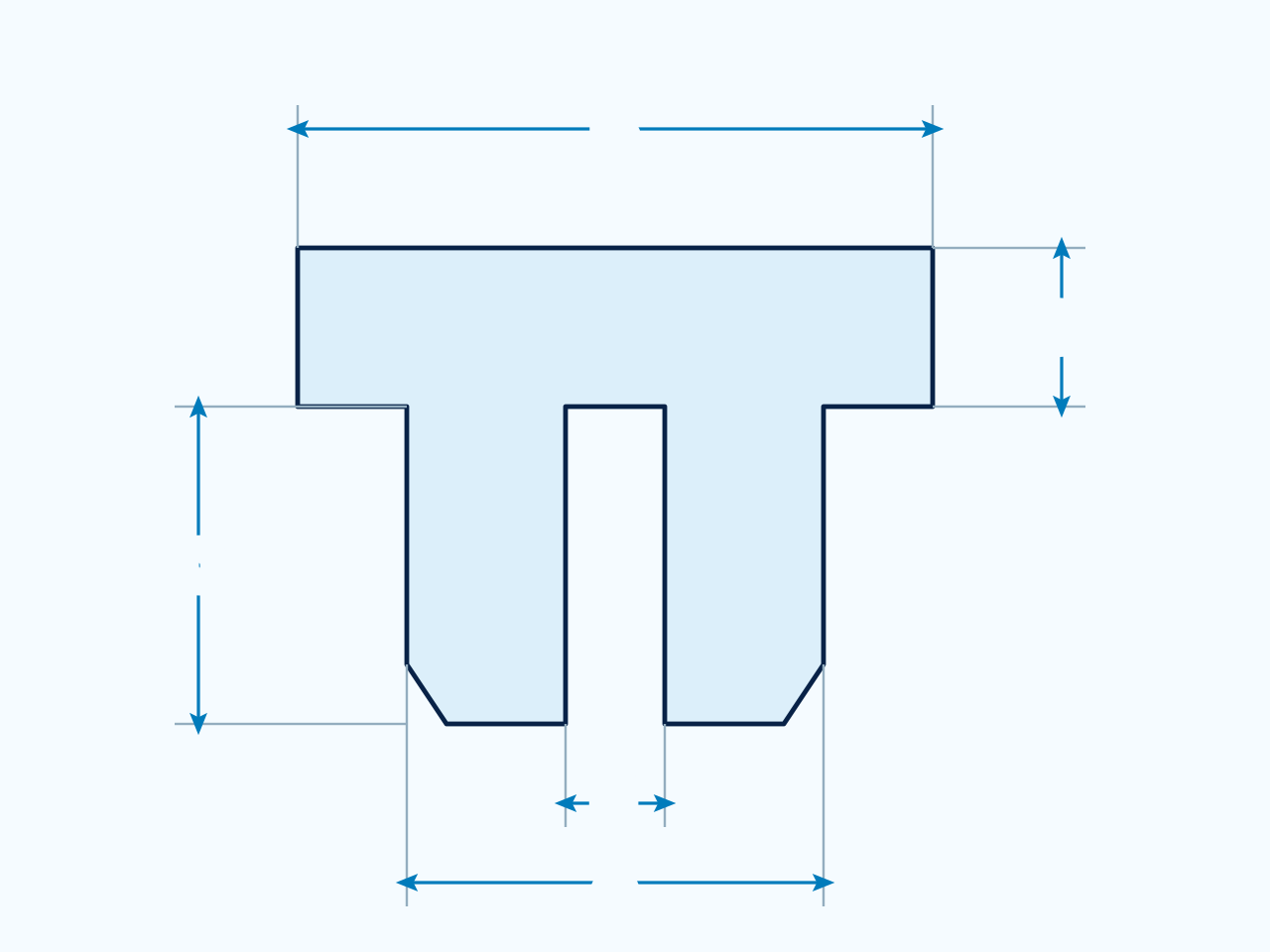
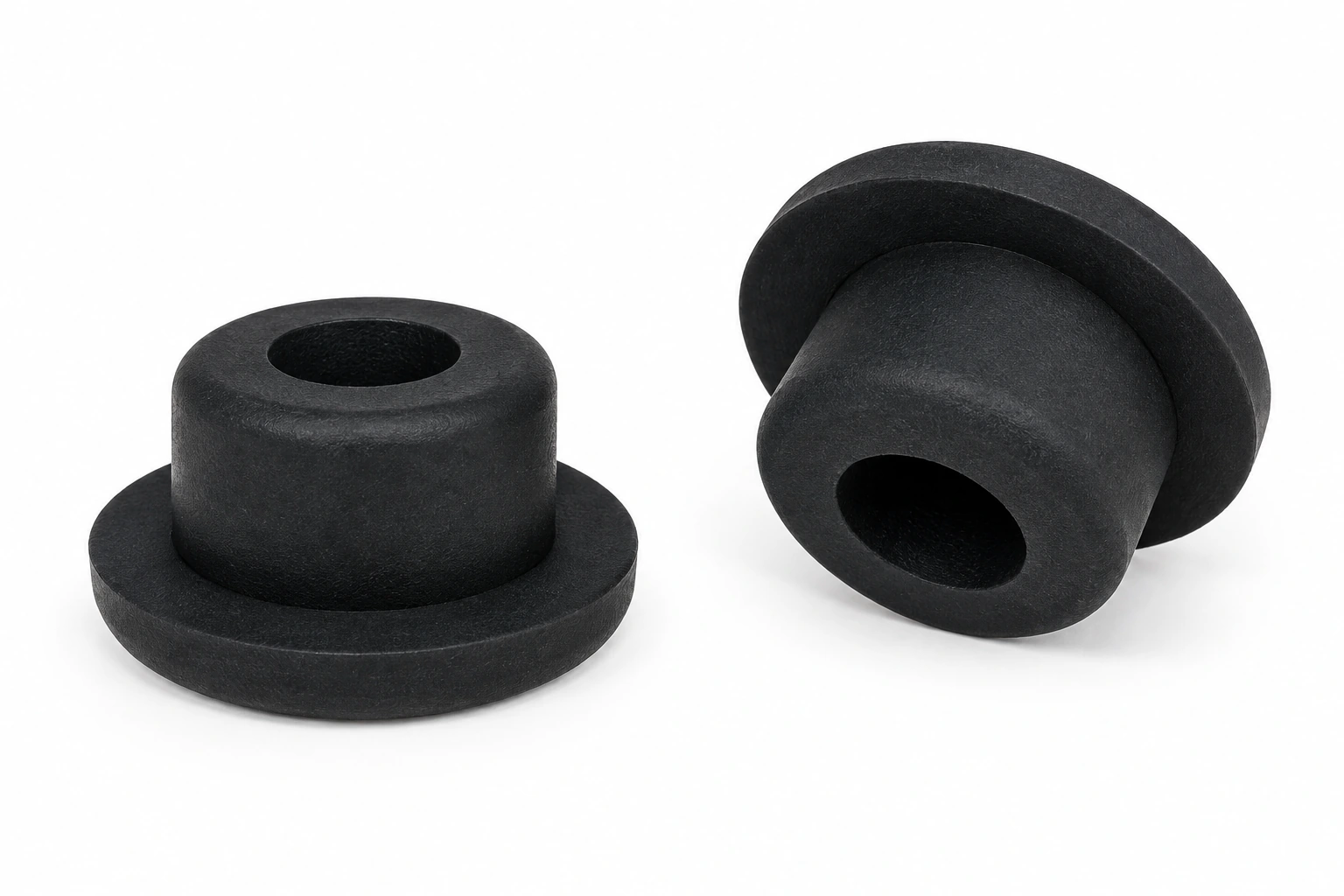
Match stem diameter A, flange diameter B, stem length C and flange thickness D. E refers to the underside recess; use the selected row and approved drawing to confirm the actual profile.
RSA Tapered Corks
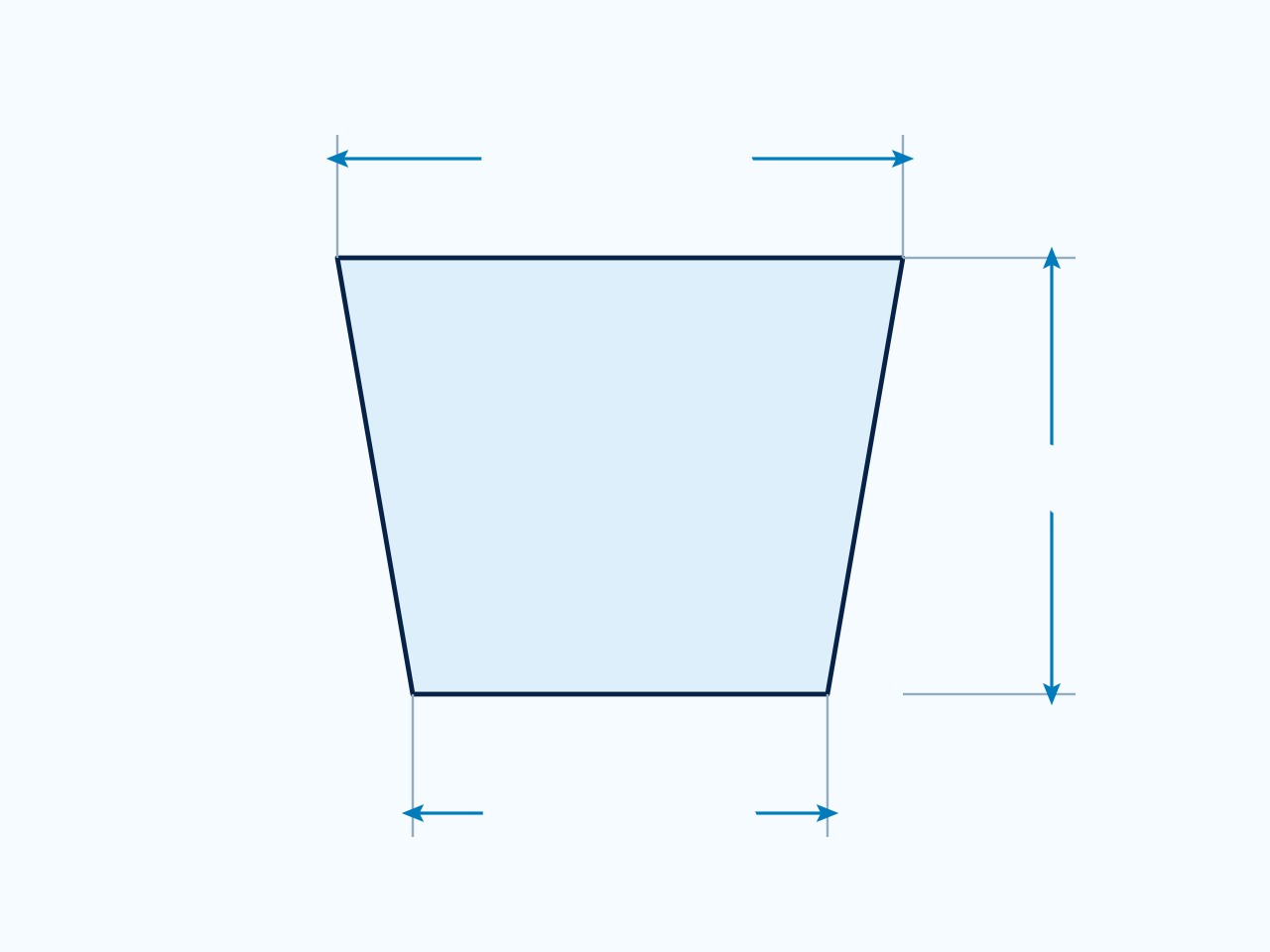
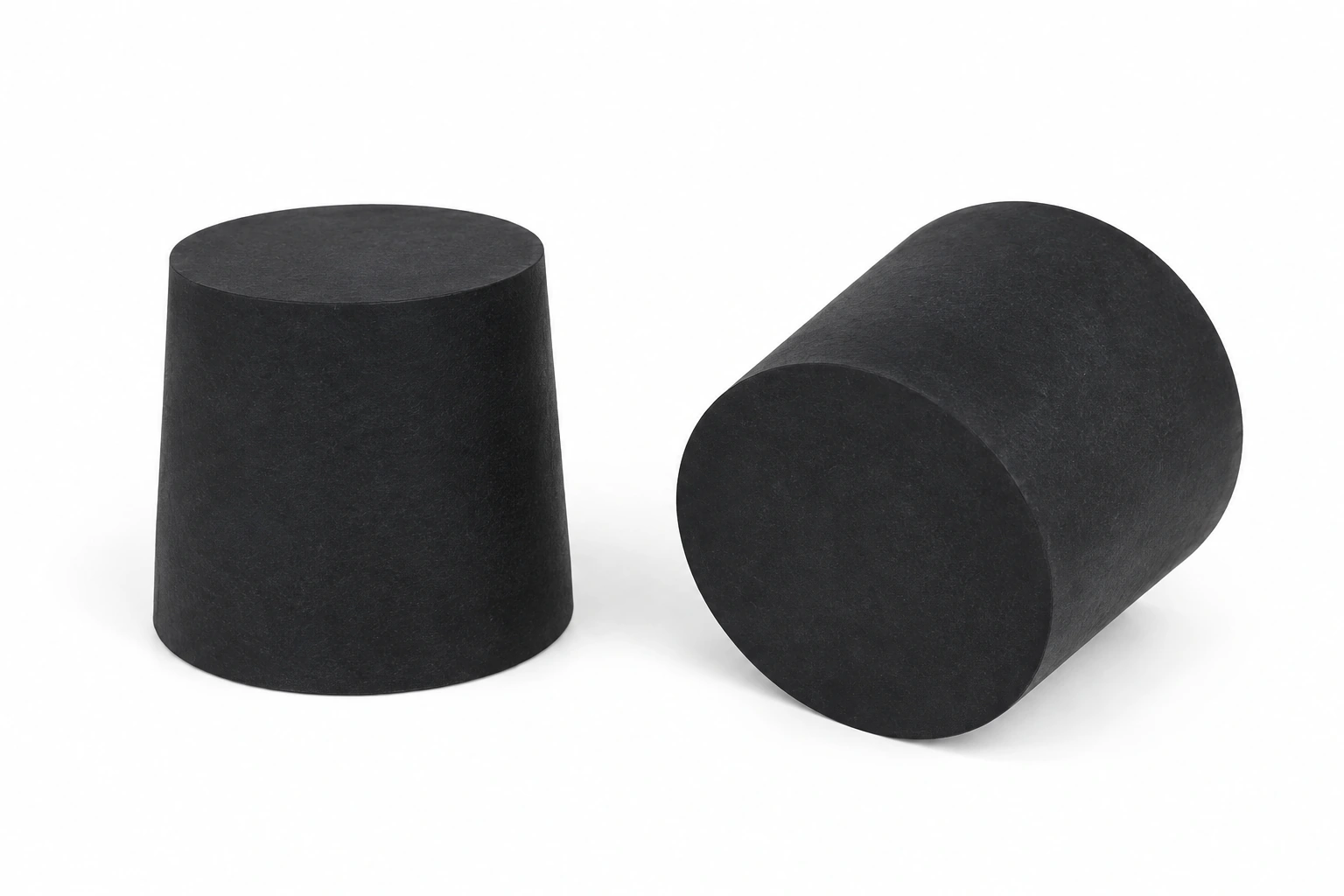
Compare large-end diameter A, small-end diameter B and Height, in mm. The mating bore and required seating depth determine where the taper contacts the opening.
RSB Undercut Plugs
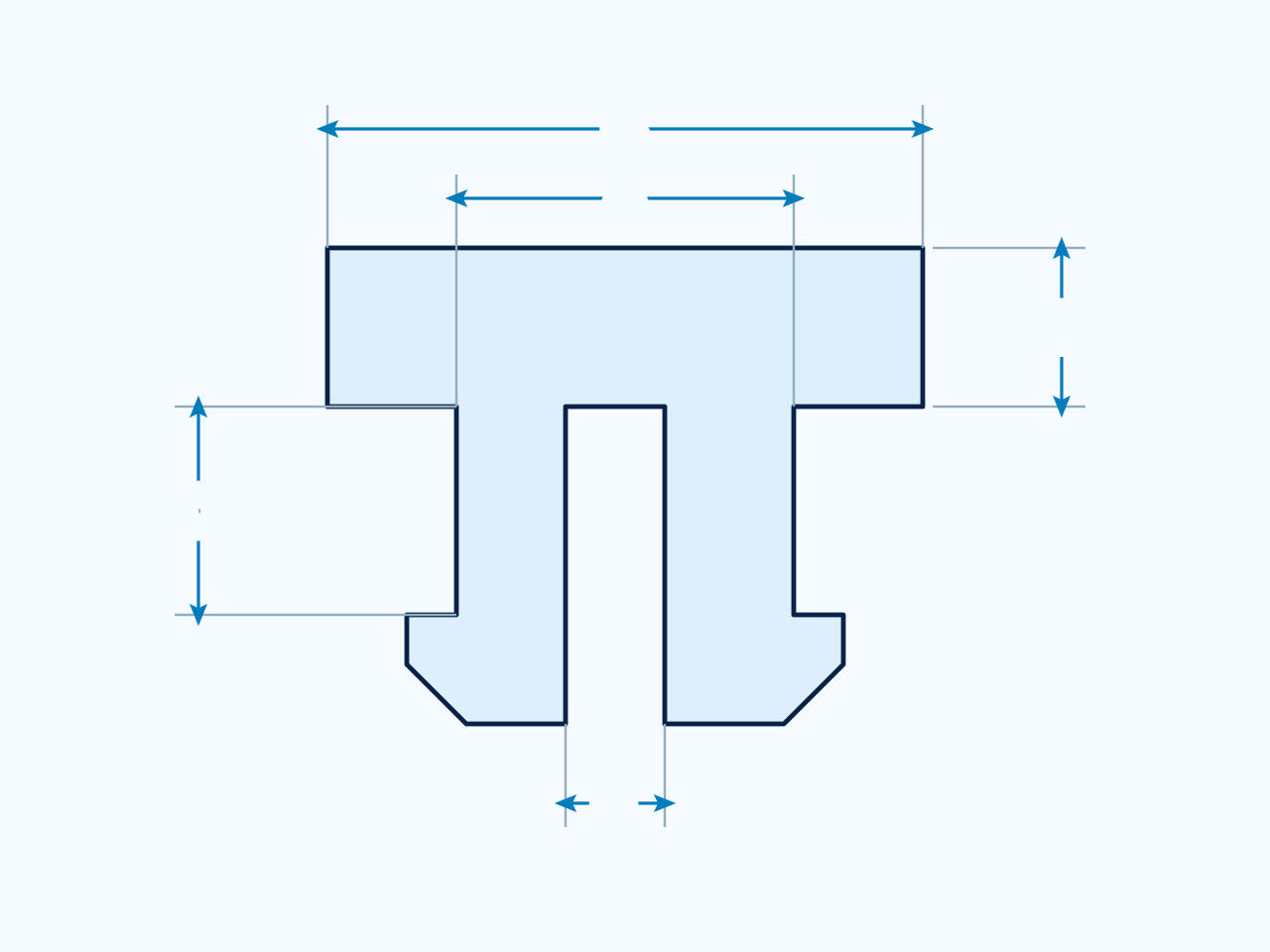
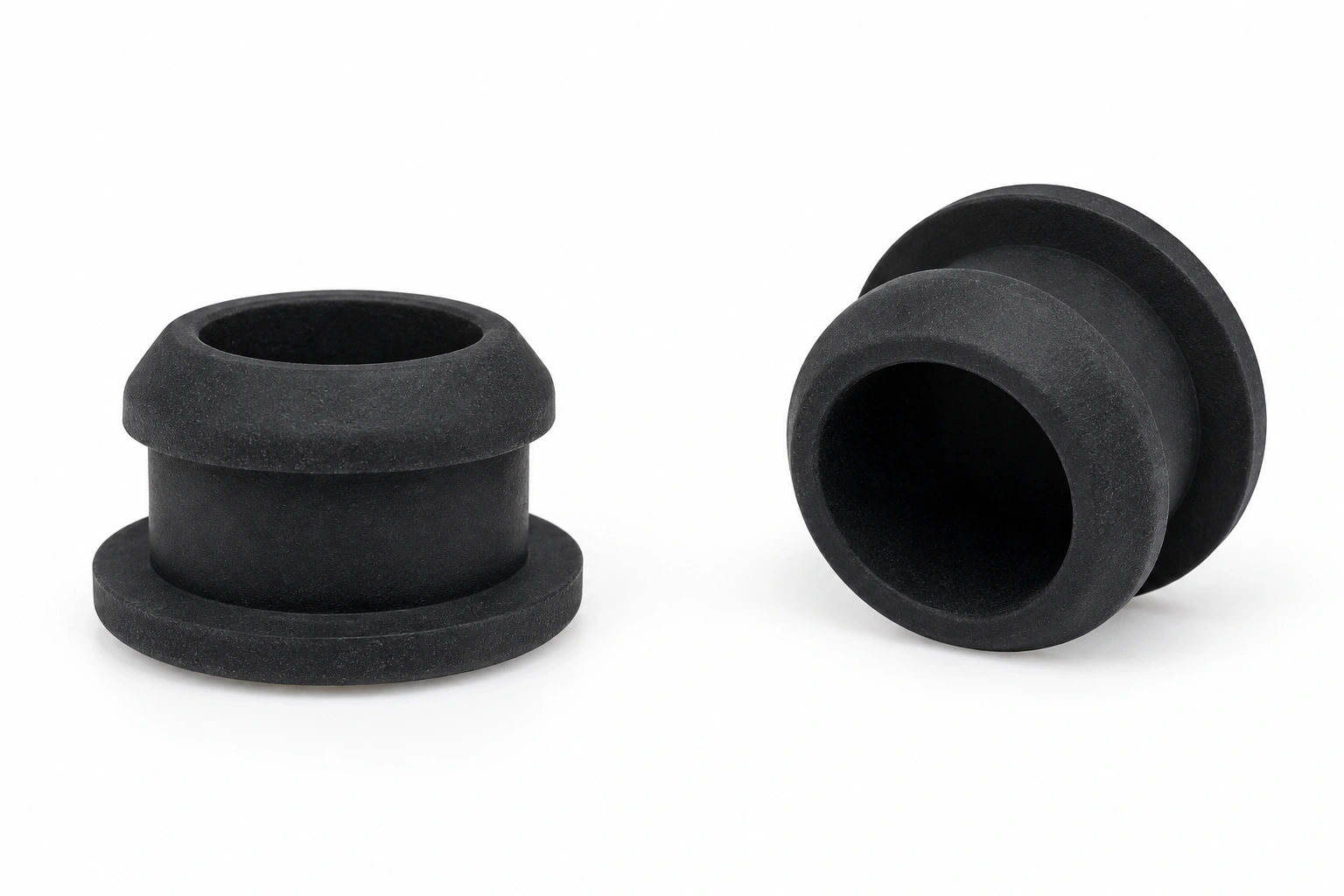
Compare neck diameter A, flange diameter B, flange-to-lip distance C and flange thickness D. Check panel thickness and rear clearance. E refers to the underside recess.
RSD T-Shaped Stoppers
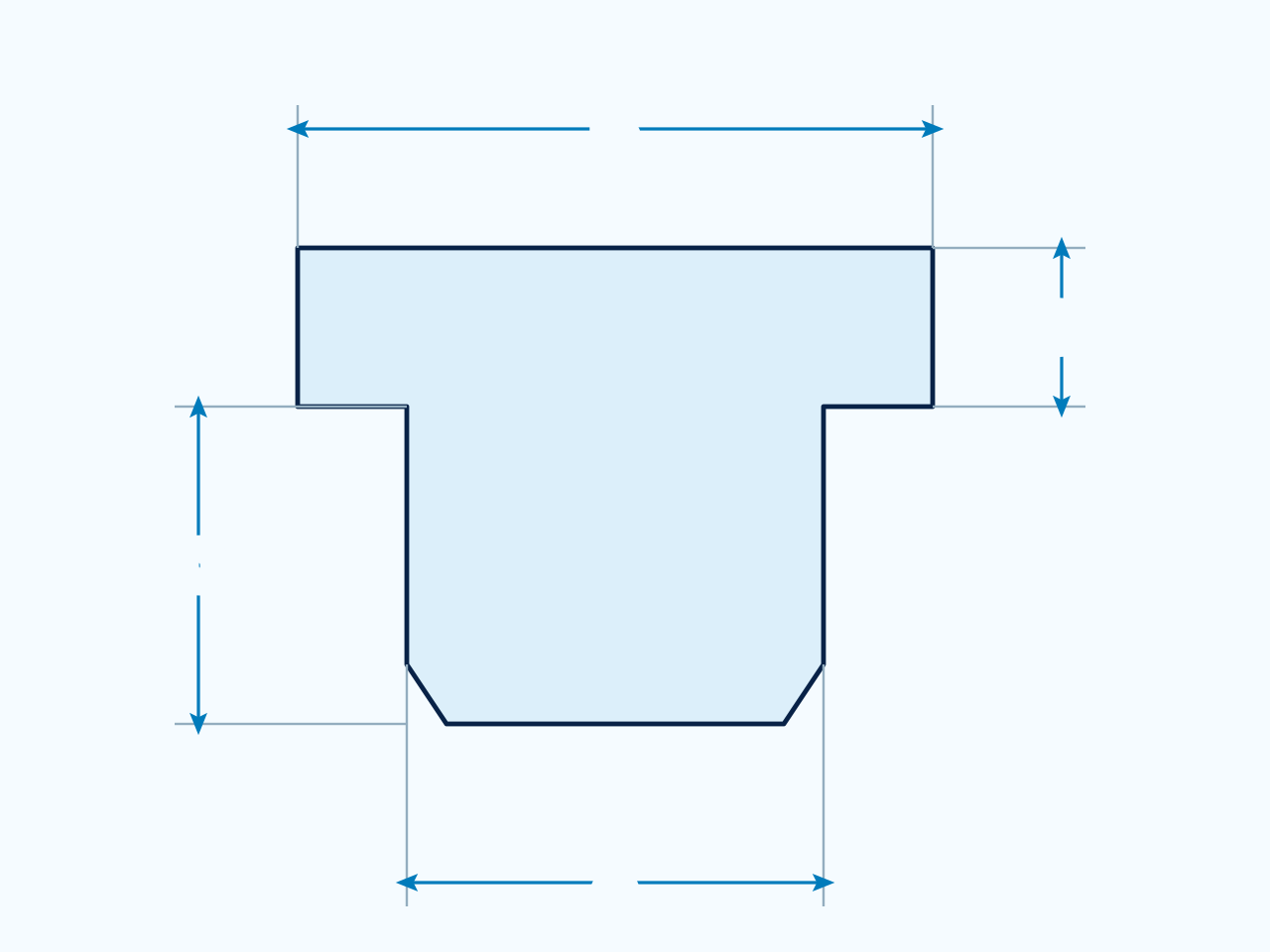
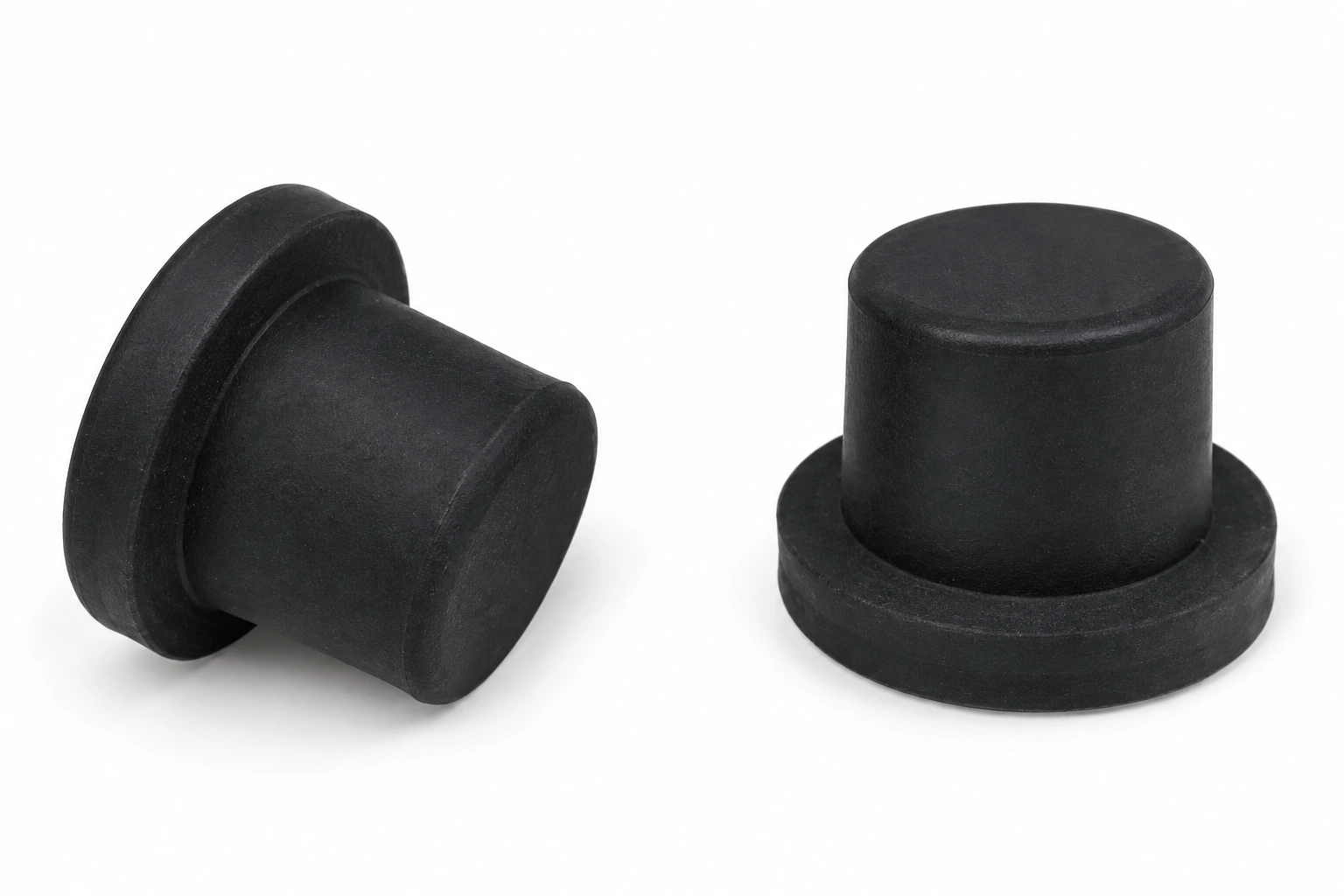
Compare stem diameter A, flange diameter B, stem length C and head thickness D, in mm. Check the seating surface and available depth as well as the hole diameter.
Need a different fit? Share the opening dimensions, mating profile and intended use for a custom size.
Discuss Your RequirementsProduct specifications
- Product form
- Removable closure fitted inside an opening
- Application focus
- Bottle necks. Size the part against the selected assembly.
- Dimensions to confirm
- Opening diameter, closure profile, insertion depth and exposed grip.
- Exposure to evaluate
- Sunlight or UV. Validate the selected material under the combined conditions.
- Seating check
- Check the sealing contact around the opening and the force needed for insertion and removal.
Need a quote or a custom part?
Send your requirements, drawings or samples to discuss standard and custom silicone rubber parts.
Email us[email protected]