
Product Details
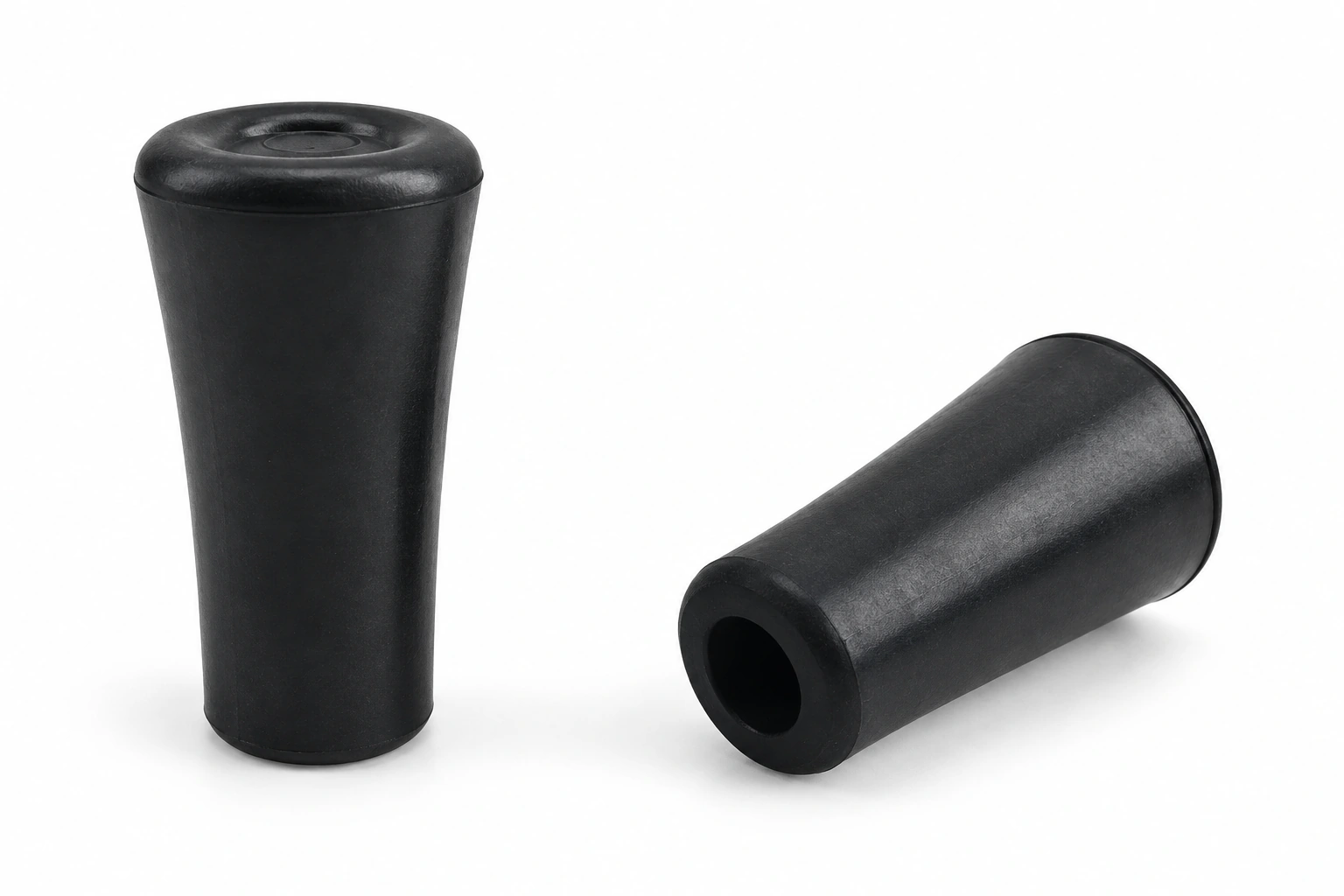
Rubber Tips
Product Specifications
- Material
- EPDM/NR/SBR/CR/Silicone. Compound selection depends on the application, including any RoHS, odor or environmental requirements.
- Hardness
- 30-85 Shore A
- Temperature Range
- Confirm the selected compound, service temperature, exposure duration and operating medium before ordering.
- Colors
- Black, white. Custom colors can be matched to your Pantone color code.
Installation
Press the feet onto matching table or chair legs. No adhesive is needed for a correctly sized push fit.
Applications
Fit to compatible trekking poles or crutches to help reduce noise and improve grip. Check the fit and suitability for the intended use.
Need custom rubber bumpers? Send us your dimensions, material and application requirements.
Available Sizes
Dimensions are in mm unless otherwise indicated.
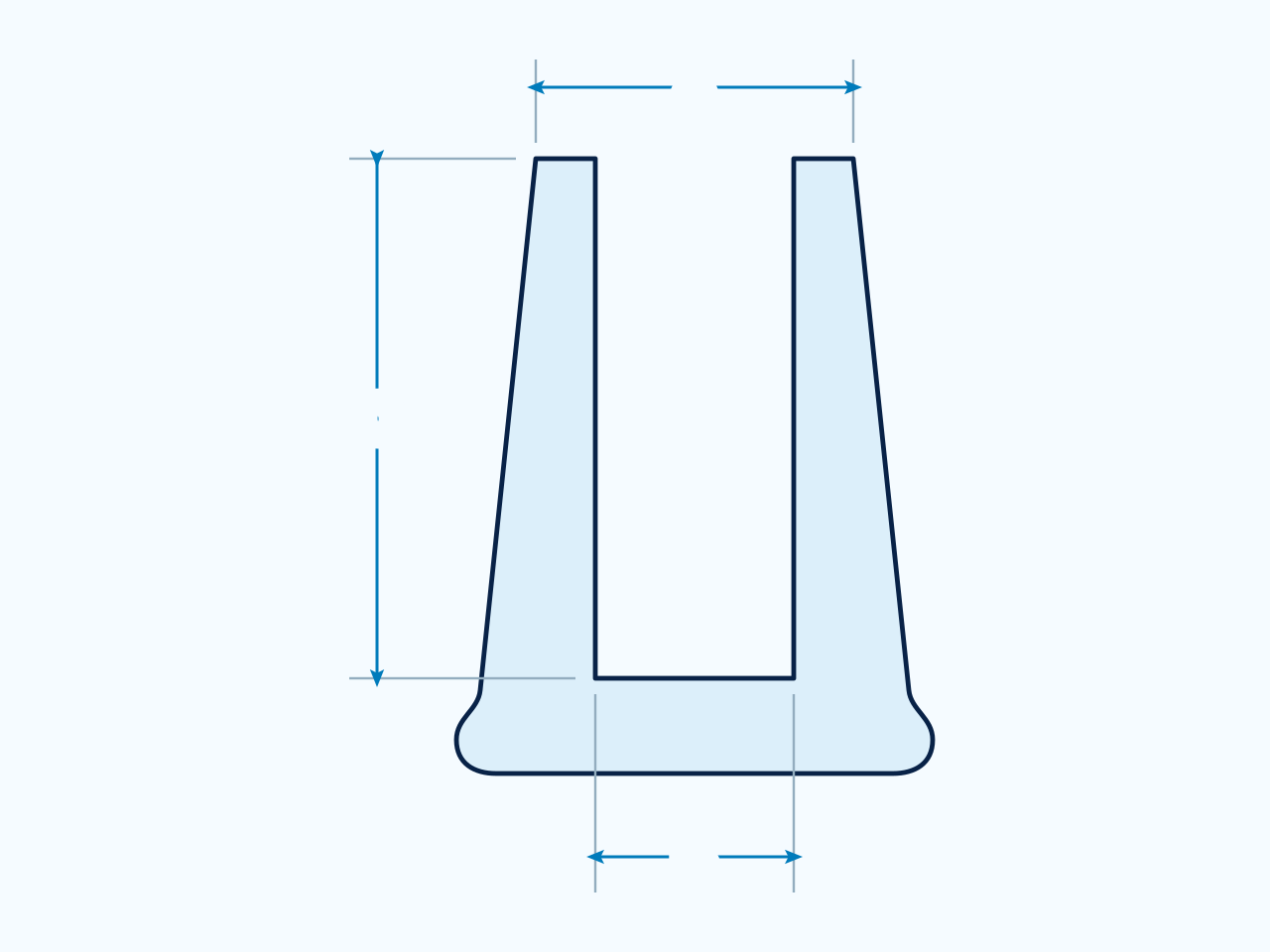
| Part No. | A | B | C | Material | Color |
|---|---|---|---|---|---|
| RFG 7101 | 14.5 | 9.5 | 30 | EPDM/NR/SBR/CR/Silicone | According to the Pantone number |
| RFG 7102 | 14.5 | 7.9 | 32 | EPDM/NR/SBR/CR/Silicone | According to the Pantone number |
Can’t find your size? Need a custom foot?
Send your dimensions, mounting details and quantity, or attach a drawing. We’ll help you review a custom size, shape or material for your application.
FIT & APPLICATION GUIDE
Fit the tip to the shaft, then check the contact end
This long, round slip-on tip encloses the end of a rod or tubular leg. Its internal engagement and closed end both matter: a tip that looks right from outside may still be loose on the shaft.
01 / BEFORE YOU CHOOSE
What to measure for this profile
- Shaft outside diameter
- Measure the finished shaft in two directions, including paint or coating. Compare with bore B; A is the outside of the tip, not the shaft size.
- Engagement length
- Compare the unobstructed shaft end with internal depth C. Check for shoulders or fittings that prevent full seating.
- End condition
- Record whether the shaft is hollow or solid. A sharp tube edge can cut into the closed rubber end.
02 / INSTALLATION
Push along the shaft axis

Prepare the shaft end
Remove dirt and sharp burrs. Inspect the tip cavity for debris before fitting.
Seat without folding the mouth
Align the bore with the shaft and press straight on. Stop if the rubber buckles or the insertion force is excessive.
Check engagement
Confirm the shaft reaches the intended seating depth and the tip does not twist or pull off during the expected movement.
Inspect the contact end
Trial the intended surface and movement. Replace a tip with a split wall, worn-through end or loose fit.
03 / USE & CHECK
Where to use this profile
Round rods and tubular supports
Use the long cavity where sufficient straight engagement is available. Specify any taper in the shaft.
Repeated contact with a surface
Evaluate wear and retention together; a thicker-looking tip does not establish a load or slip rating.
For a selection review: Shaft OD and tolerance, insertion length, hollow or solid end, contact surface and expected movement. Send your application details →
Need a different size or shape?
Tell us what you need. We'll help you find the right rubber or silicone part and prepare a quote.