
Vibration Isolation Feet
As you are probably aware, there are many instruments, devices or heavy machinery that generate a large amount of vibrations while they are working. Those vibrations are not only loud and annoying but can possibly cause some damage to the surroundings or to the device itself. Fortunately, we could just have a solution for that problem. Most of the vibrational issues can be solved with just one thing – rubber. And, if there is something we are good at, it is making high-quality products from rubber.
When it comes to absorbing vibrations, there are loads of products you can use, and the best thing about it is – we can make all of them. One of our most popular vibration absorbing products are vibration isolation feet.
Vibration isolation feet are one of the most versatile vibration absorbing products. They can be used in a variety of scenarios in many different applications. You can find these in factories, as well as in residential homes. Almost any device that is vibrating can be improved with vibration isolation feet. Do you have a washing machine that is bouncing? Place it on vibration isolation feet. Not to mention all the applications in the industrial setting. Vibration isolation feet can do it all.
One of the reasons why these are so versatile is that they come in various shapes and sizes. Some of them are made exclusively for some products, while some of them can be applied in different scenarios. Some are mounted with screws and bolts, and some are inserted into holes or simply placed underneath the vibrating device. They are usually not very tall, standing only a few centimetres tall in the best-case scenario. However, that is more than enough in most cases. Usually, vibration isolation feet are made from natural rubber, but they can be made from other types of rubber as well. It all depends on what you need.
Vibration Mount Size Catalog
Compare five mounting arrangements using the matching drawing, thread and dimensional data. Load and compression columns retain their stated units; confirm operating conditions for your installation.
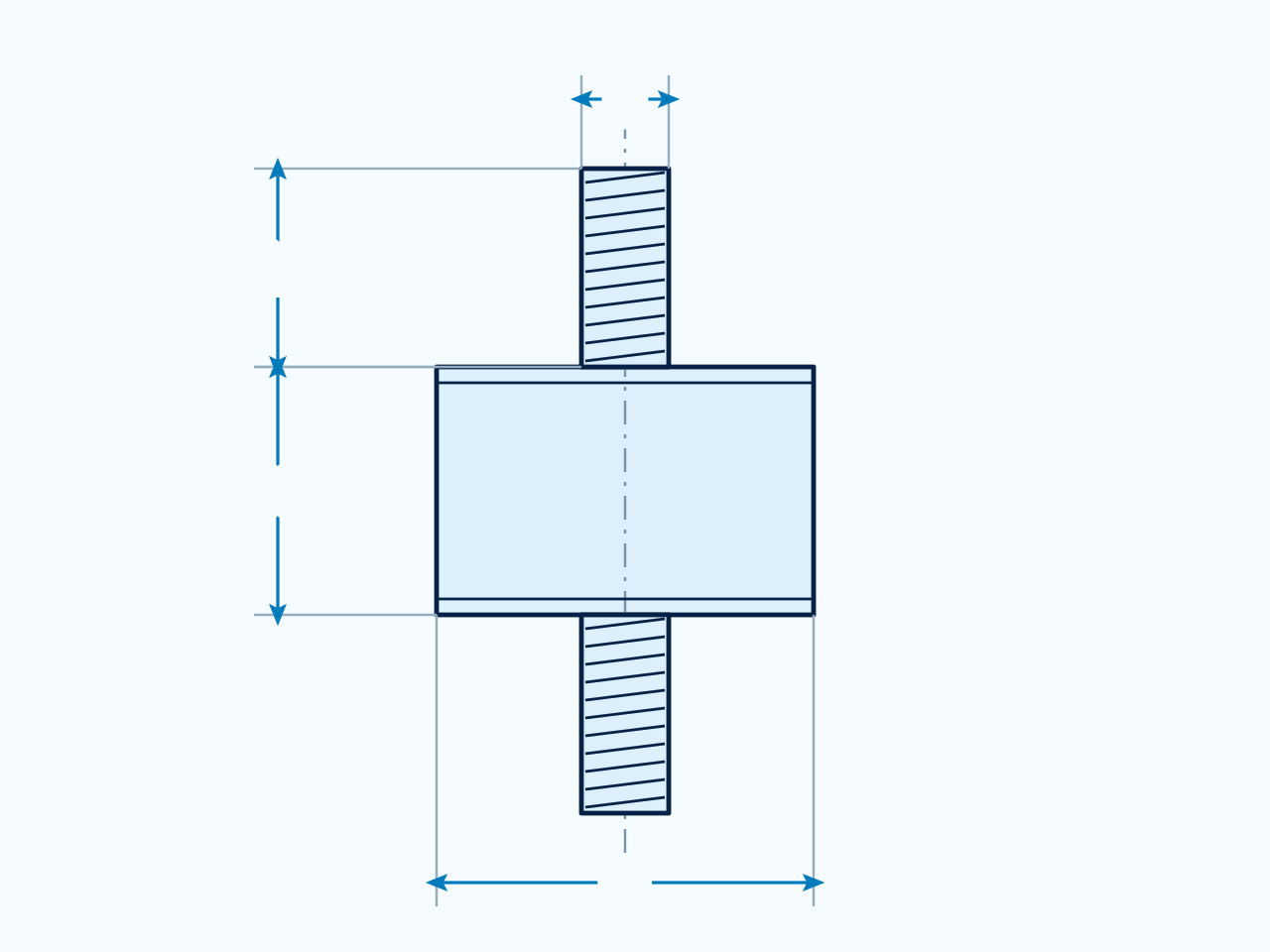
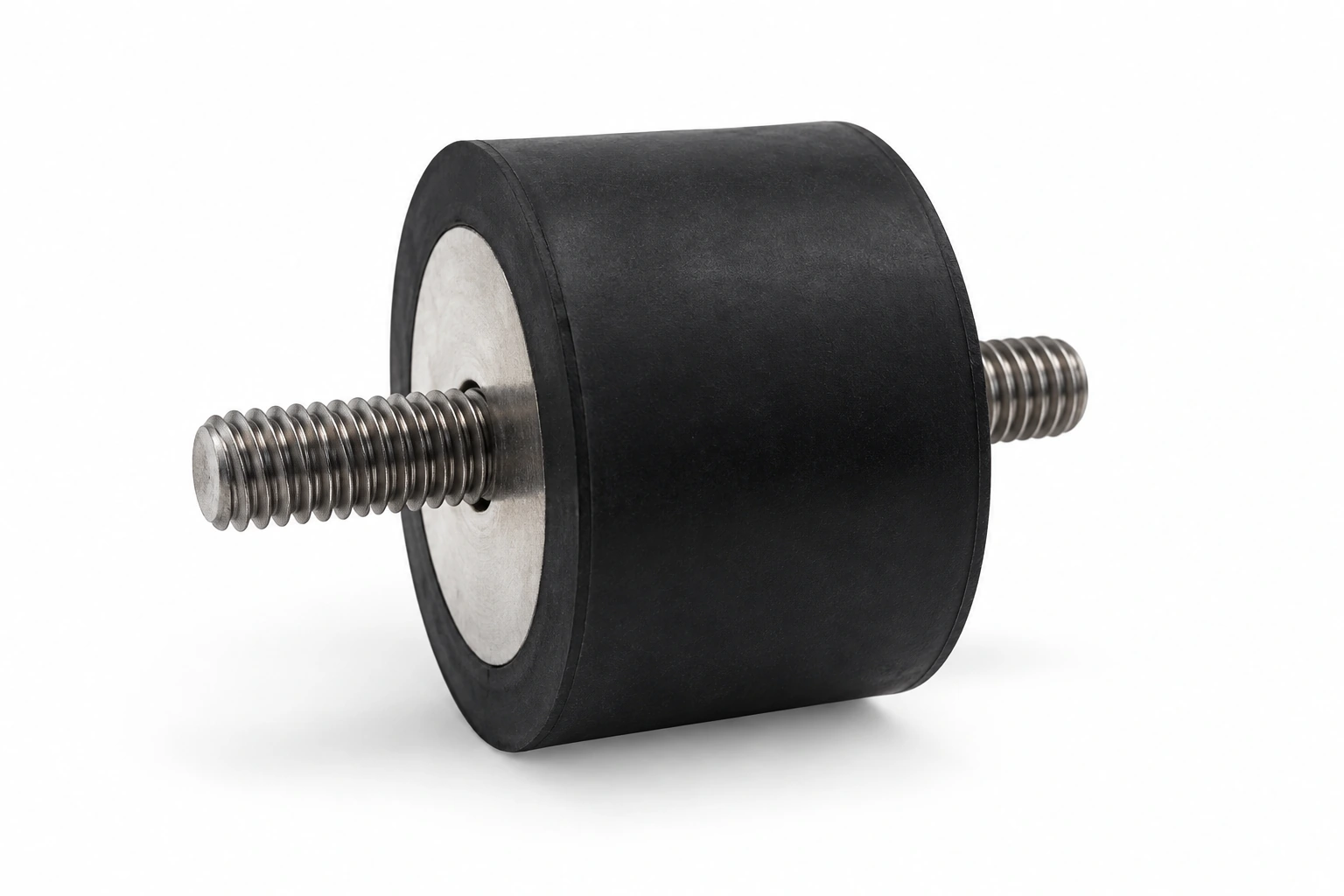
Vibration Damping Mounts A
Match D, H and thread d to the drawing, including stud length L. Dimensions are in mm; thread designations, load in kg and compression in mm follow the table headings. Confirm load direction and operating conditions for your installation.
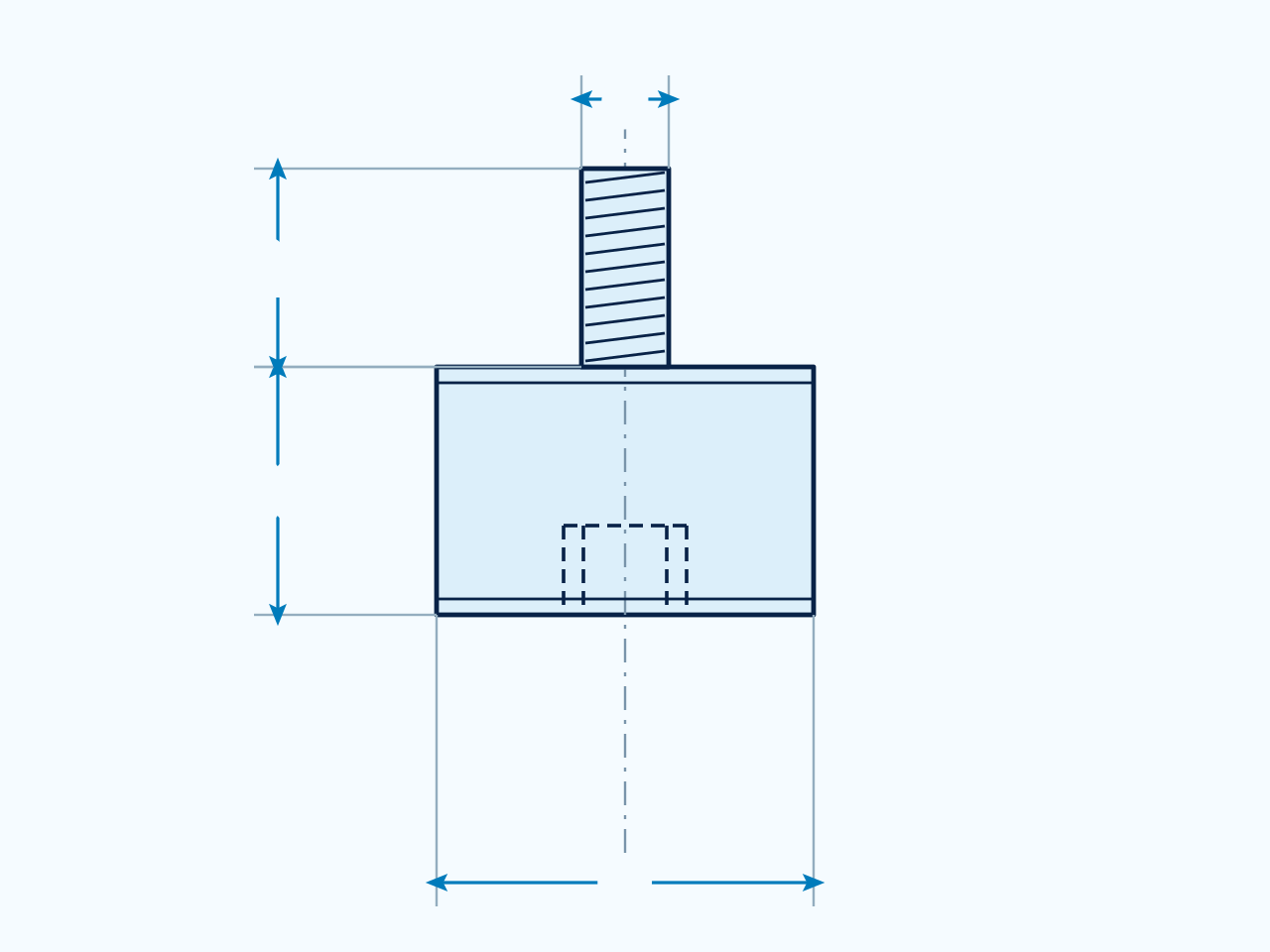
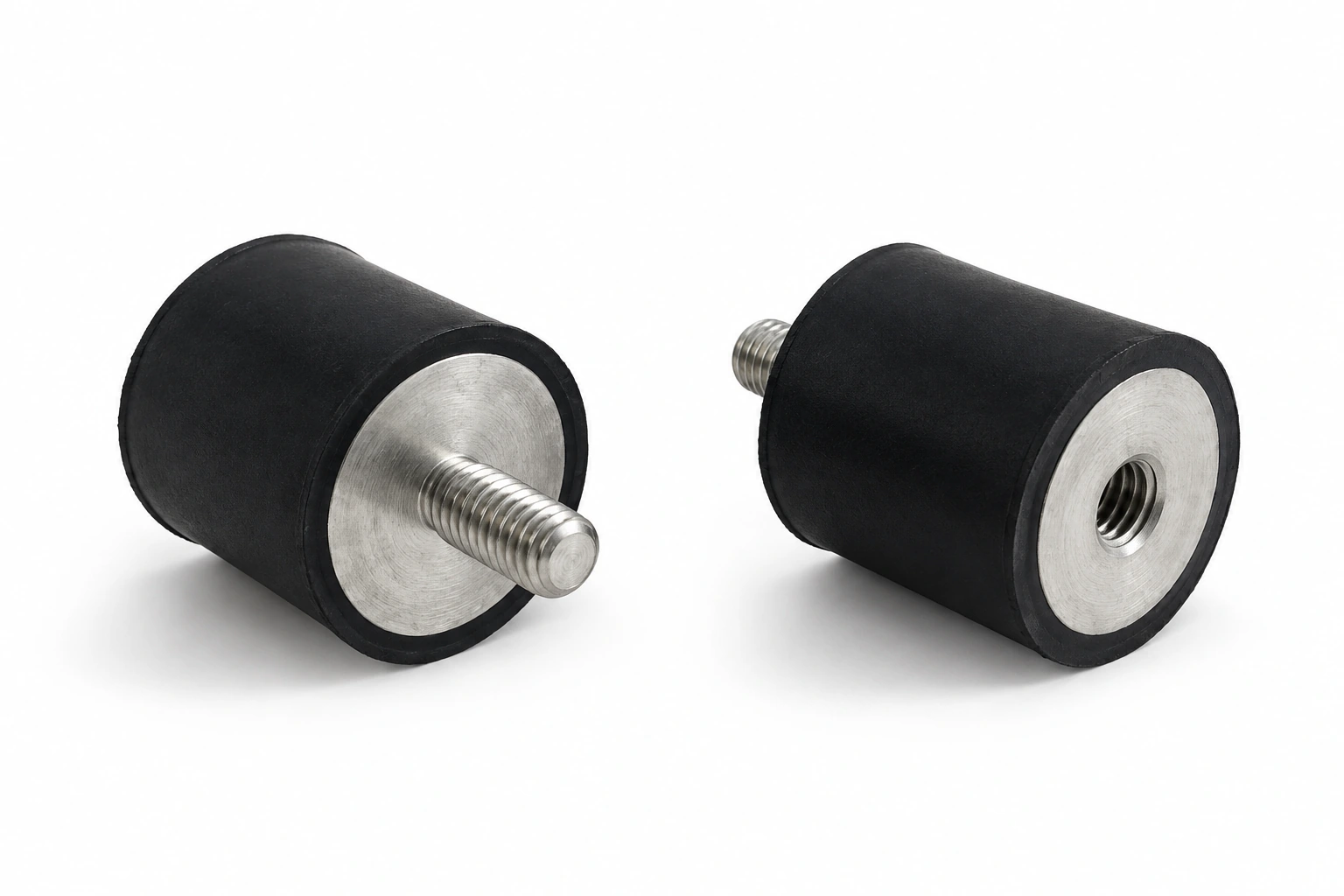
Anti-Vibration Rubber Mounts B
Match D, H and thread d to the drawing, including stud length L. Dimensions are in mm; thread designations, load in kg and compression in mm follow the table headings. Confirm load direction and operating conditions for your installation.
Vibration Isolators C
Match D, H and thread d to the drawing. Dimensions are in mm; thread designations, load in kg and compression in mm follow the table headings. Confirm load direction and operating conditions for your installation.
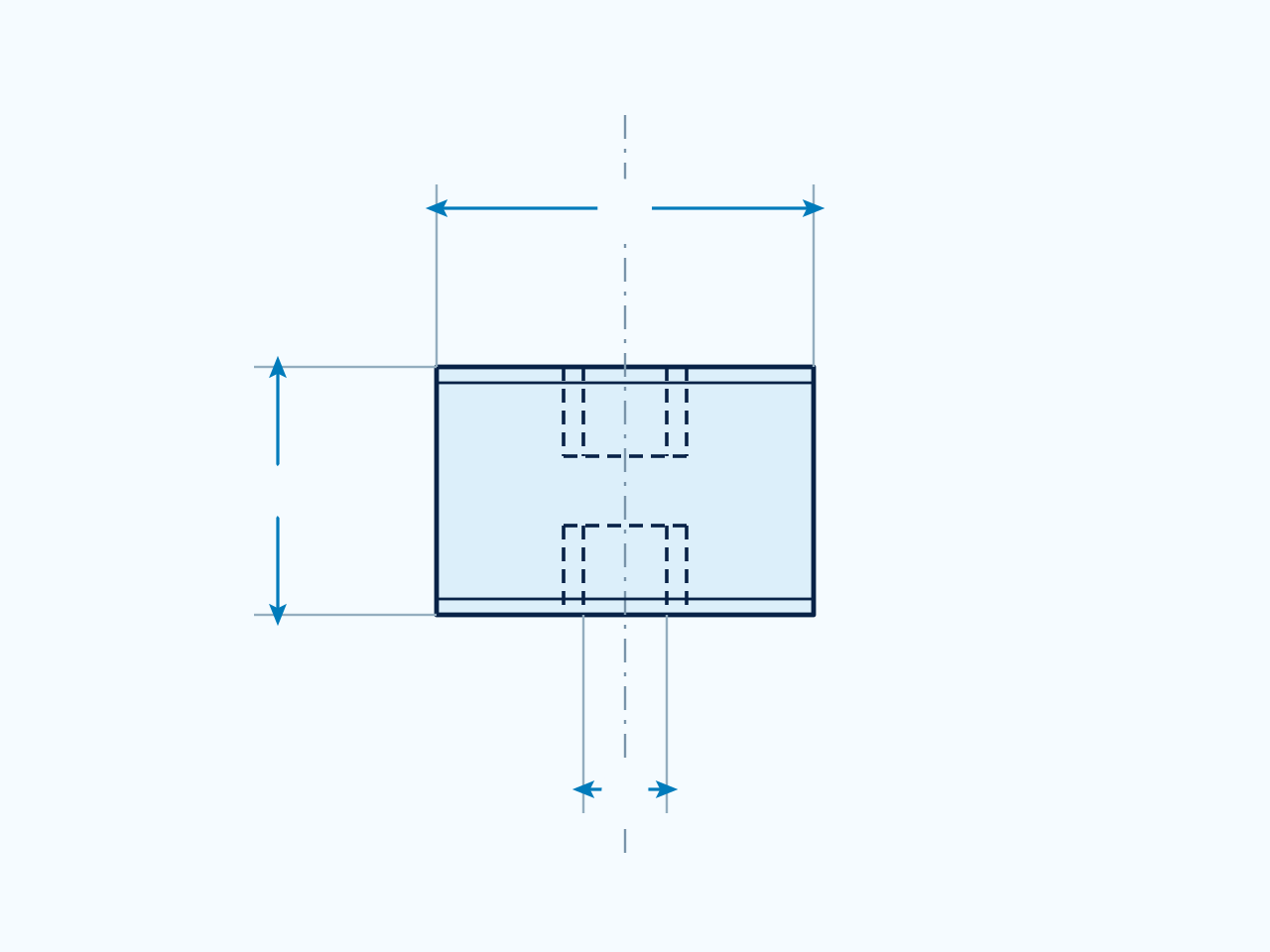
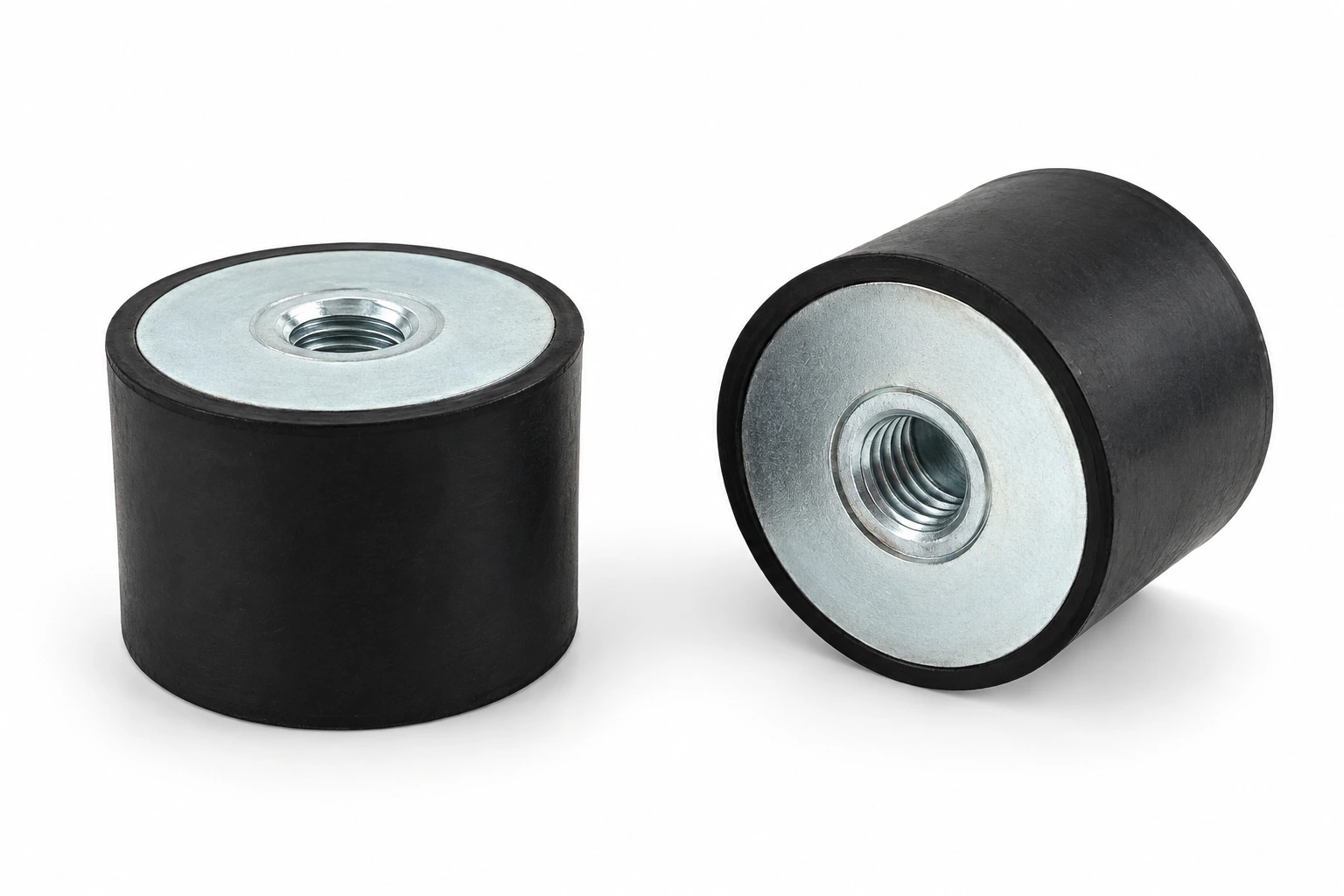
Rubber Mountings D
Match D, H and thread d to the drawing, including stud length L. Dimensions are in mm; thread designations, load in kg and compression in mm follow the table headings. Confirm load direction and operating conditions for your installation.
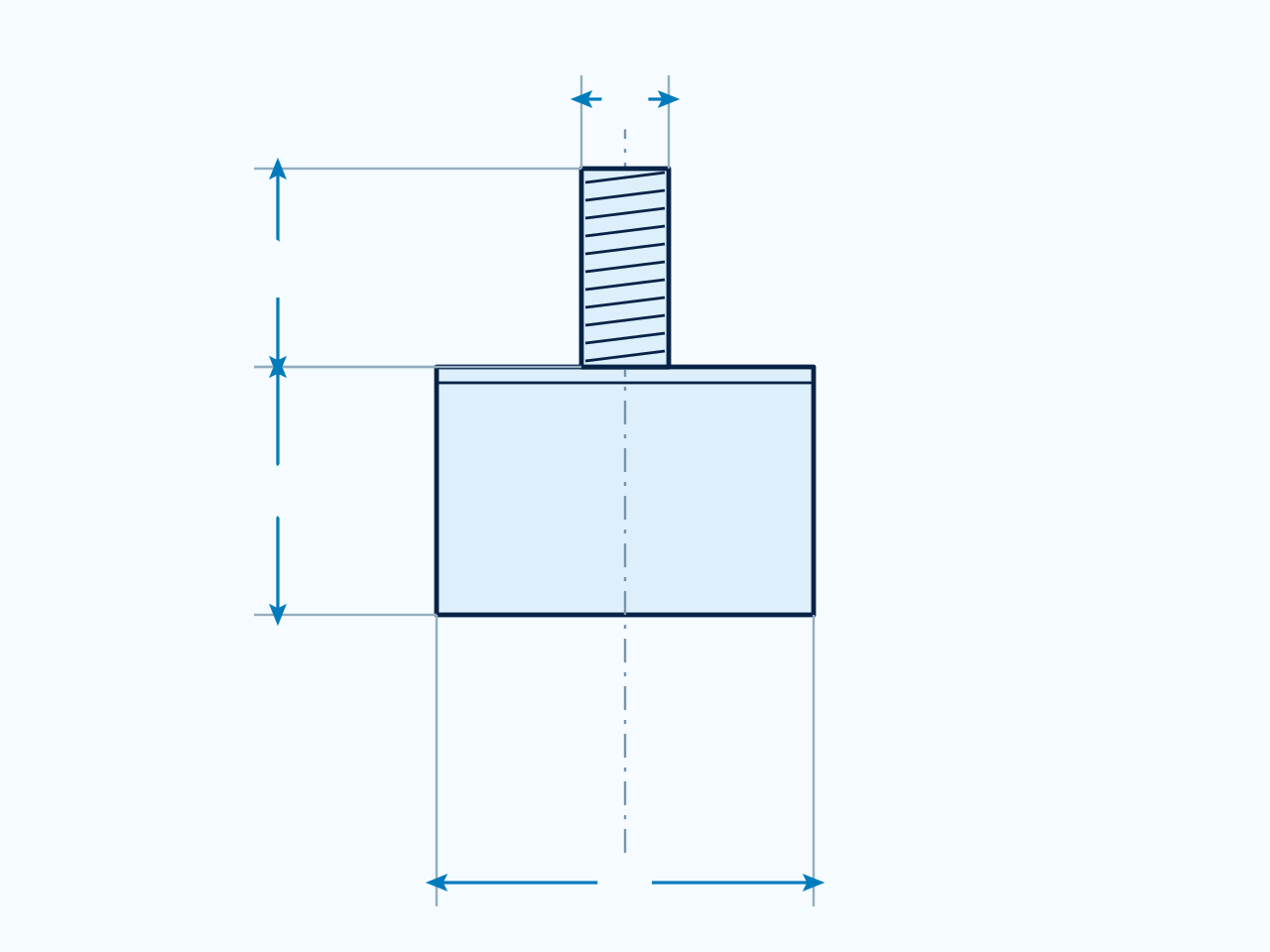
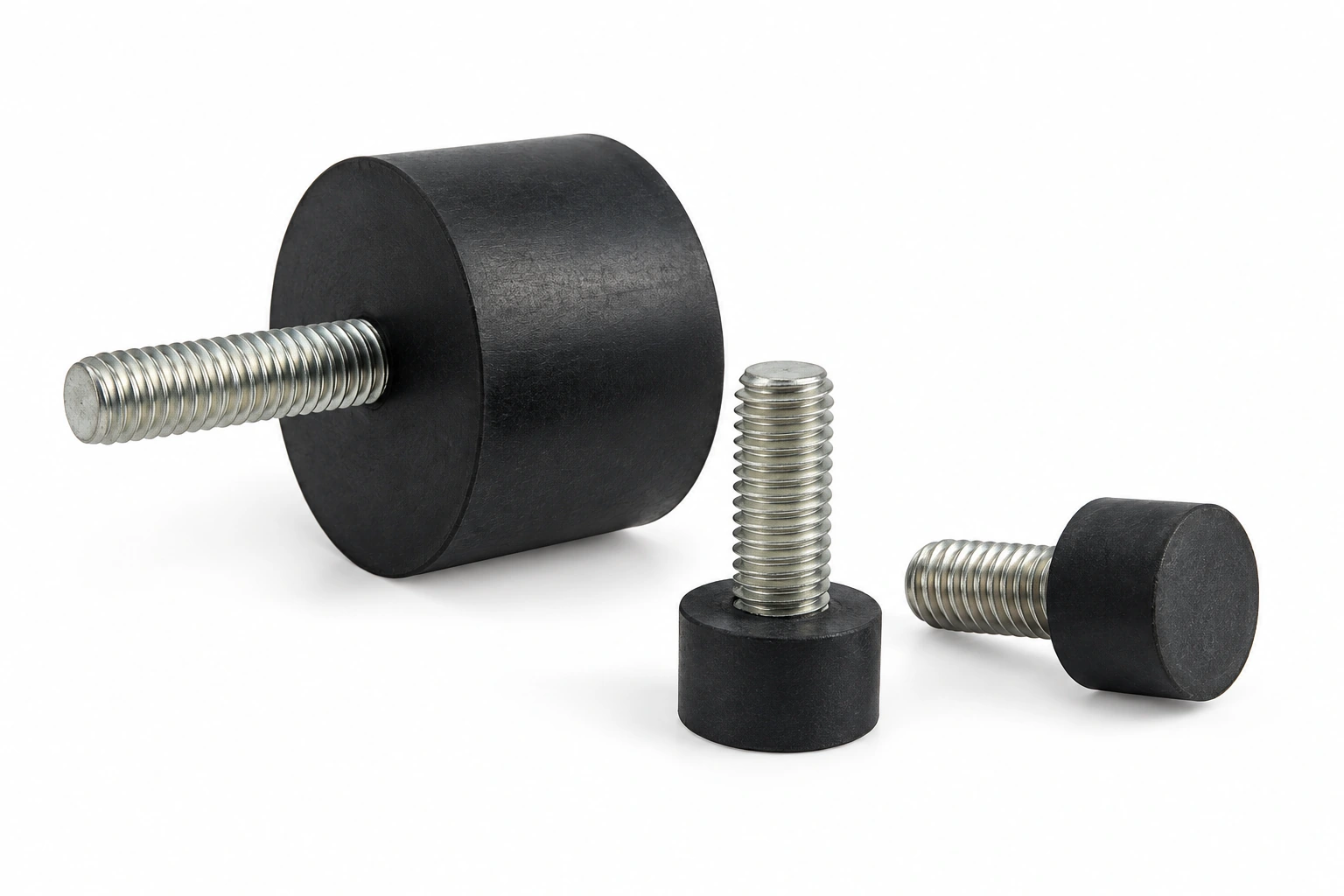
Rubber Vibration Mounts E
Match D, H and thread d to the drawing. Dimensions are in mm; thread designations, load in kg and compression in mm follow the table headings. Confirm load direction and operating conditions for your installation.
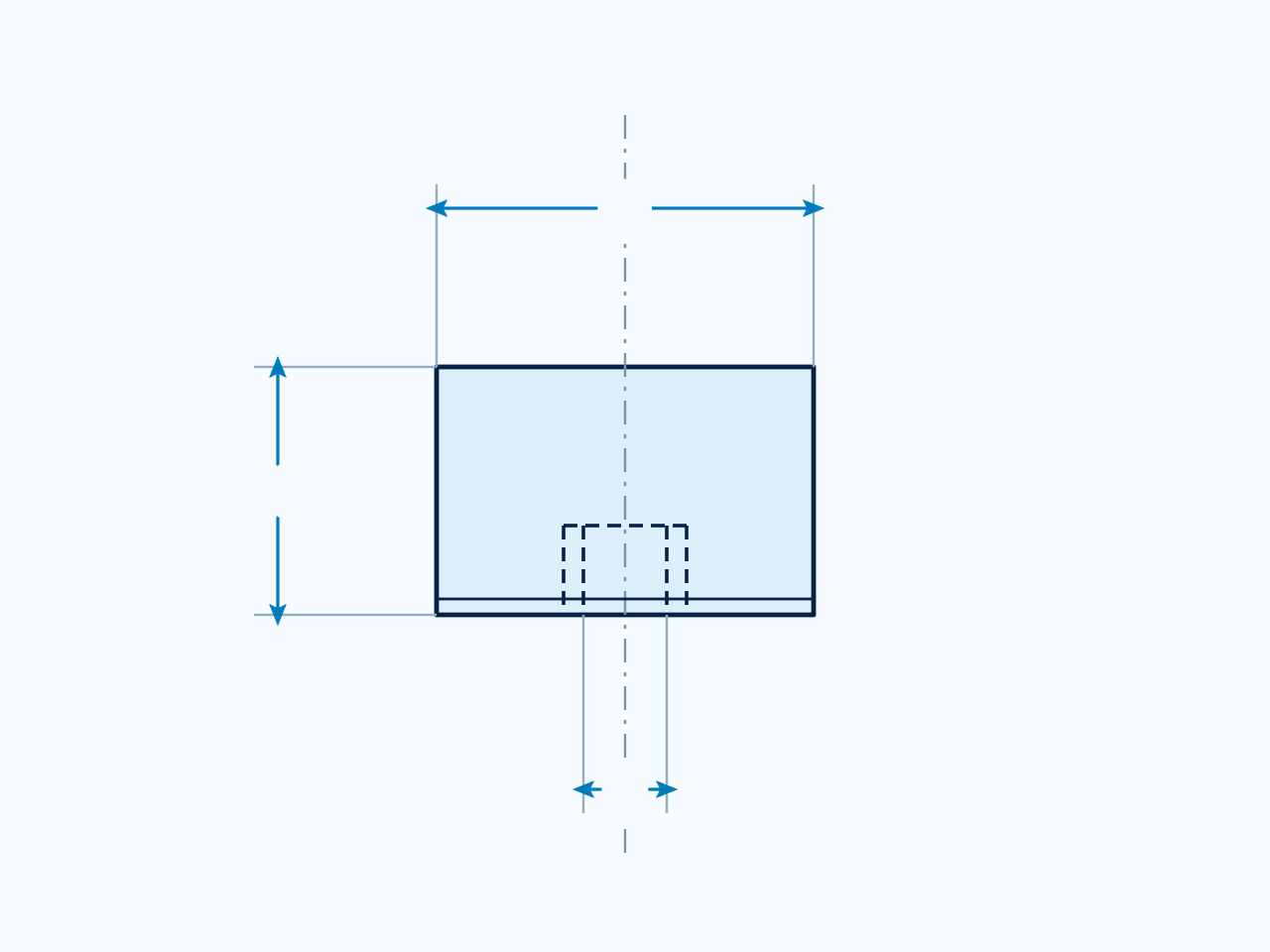
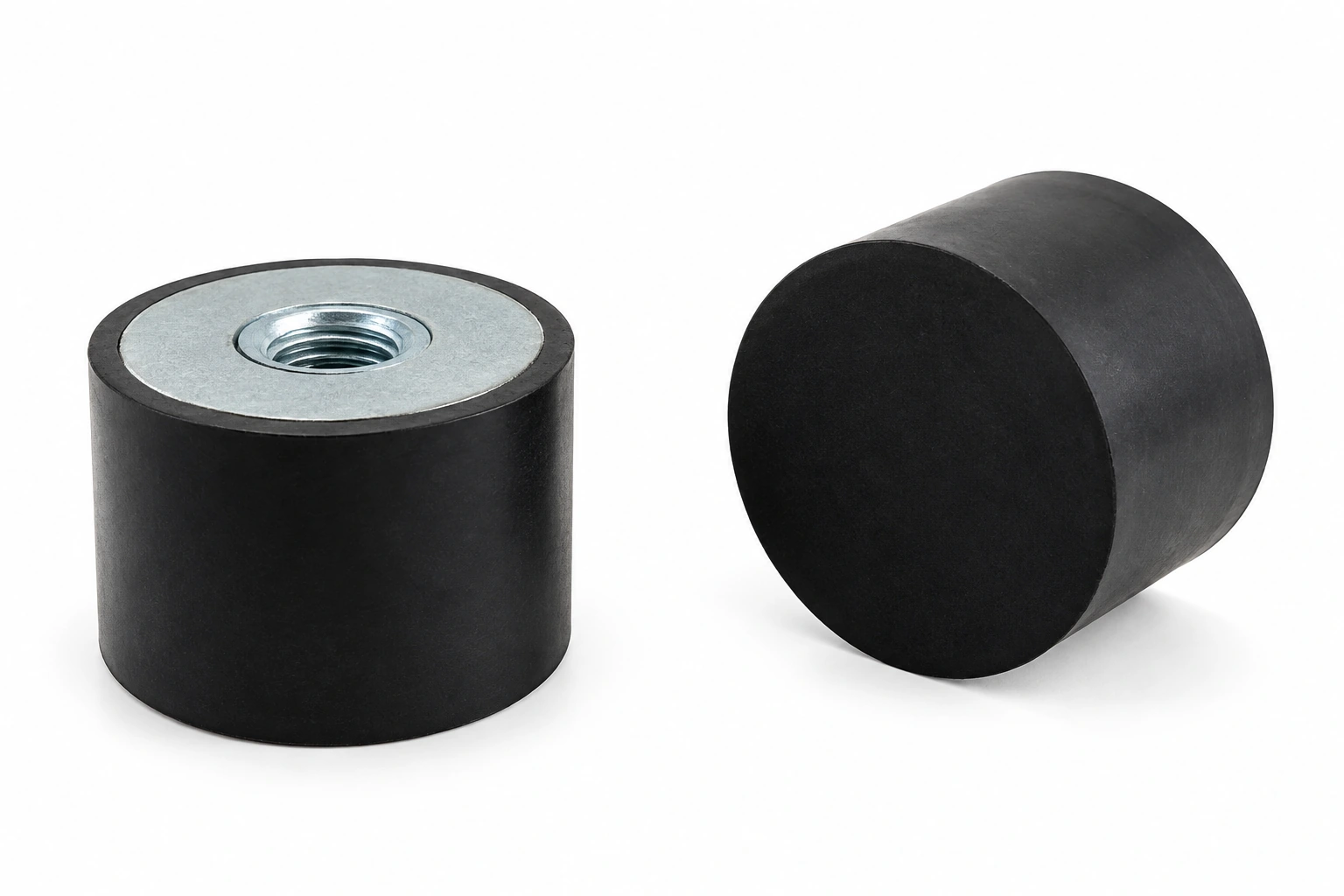
Need a different size? Share your drawing, mating dimensions and intended use to discuss a suitable part.
Discuss Your RequirementsProduct specifications
- Product form
- Elastomer mount between a vibrating assembly and its support
- Material options discussed
- Natural rubber / latex. Choose one formulation for the actual contact and loading conditions.
- Application focus
- Heavy machinery and washing machines. Size the part against the selected assembly.
- Dimensions to confirm
- Free and loaded heights, attachment spacing and body envelope. Match these to heavy machinery and washing machines.
- Isolation objectives
- Steady vibration. Define a measurable acceptance target on the supported assembly.
- Construction discussed
- Bolts or screws. Detail the chosen arrangement and all mating hardware on the drawing.
- Dynamic selection
- Use the load per mount, excitation frequency and allowed movement to select the mount.
Need a quote or a custom part?
Send your requirements, drawings or samples to discuss standard and custom silicone rubber parts.
Email us[email protected]